

Have you ever wondered how animals find their perfect mate? While human courtship rituals can be elaborate, animal mating habits are often even more bizarre, intricate, and fascinating.
From intricate dances to astonishing displays of strength, animals have evolved some of the most creative ways to attract a mate.
Let's take a closer look at some of these incredible rituals that make the animal kingdom so diverse and awe-inspiring.
<h3>Why Do Animals Have Mating Rituals?</h3>
Mating rituals are more than just a way for animals to reproduce—they play a crucial role in ensuring the survival of the species. These rituals often serve as a way to assess the fitness of a potential mate, helping animals choose the best partner to pass on their genes.
In some species, the more elaborate or impressive the display, the better the chances of securing a mate. The rituals also help animals avoid conflict by establishing dominance or attraction without the need for violent confrontations.
<b>Signaling Genetic Fitness:</b> Many animals use mating rituals to signal their physical strength, health, and genetic quality. A strong and healthy mate is more likely to produce strong offspring, which is why animals go to great lengths to show off their best traits.
<b>Avoiding Inbreeding:</b> In some species, mating rituals help individuals find mates that are not closely related, which reduces the risk of inbreeding and genetic defects in their offspring.
<b>Ensuring Successful Reproduction:</b> These rituals also help ensure that mating occurs at the right time, in the right environment, and with the right partner, all of which are essential for the survival of the species.
<h3>Incredible Mating Displays</h3>
Some animal species have developed mind-blowing ways to court a mate. These displays often involve intricate dances, flashy colors, or even dangerous feats that help animals stand out from the crowd.
<b>The Peacock's Feathers:</b> The peacock is perhaps the most famous example of animal courtship. The male spreads his vibrant tail feathers, each one adorned with eye-catching patterns. The larger and more colorful the tail, the more likely the peacock is to attract a mate. Females choose their partner based on the size and brilliance of these feathers, signaling the male's genetic fitness.
<b>The Bowerbird's Creative Nest:</b> Male bowerbirds take courtship to another level by building intricate nests, or “bowers,” to impress females. They decorate these nests with a variety of objects, such as colorful flowers, shells, and even pieces of plastic or glass. The more elaborate and appealing the display, the more likely the female will choose that male as her mate.
<b>The Bullfrog's Deep Croak:</b> Male bullfrogs attract females with their deep, resonant croaks. The males often compete by calling as loudly and continuously as possible. The female then selects the male with the most impressive call, signaling his strength and ability to defend the territory.
<h3>Unusual Mating Rituals in the Ocean</h3>
The world's oceans also hold some of the most remarkable and strange mating behaviors. From light displays to complex dances, the underwater world is a hub of creativity when it comes to attracting a mate.
<b>Anglerfish's Bioluminescent Lure:</b> Deep in the dark ocean depths, the anglerfish has evolved a unique way to attract mates. The female anglerfish uses a glowing lure, a bioluminescent feature on her head, to draw in potential mates. But the process doesn't stop there—once a male finds a female, he fuses with her, becoming a permanent part of her body, supplying genetic material in exchange for food and protection.
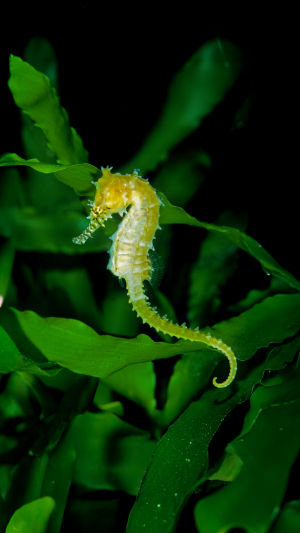
<b>The Seahorse's Role Reversal:</b> In the seahorse world, it's the males who carry and give birth to the offspring. During mating, the female seahorse transfers her eggs into the male's pouch, where he fertilizes them. This role reversal is a rare and fascinating example of gender roles being flipped in the animal kingdom.
<b>The Whale's Song:</b> Humpback whales are known for their hauntingly beautiful songs, which they sing to attract females. These songs can last for hours and are often repeated throughout the breeding season. Scientists believe that the songs may help females choose mates, with longer, more complex songs signaling stronger, healthier males.
<h3>Surprising Strategies in the Animal Kingdom</h3>
While many animals rely on impressive displays, others use surprising and sometimes sneaky strategies to ensure they mate. These strategies often involve clever tricks, deceit, or even stealth.
<b>The Male Seahorse's Sneaky Tactics:</b> While female seahorses are busy transferring their eggs into their male partners' pouches, some males engage in “sneaky” tactics. Certain males will attempt to sneak their eggs into the pouch of another male, avoiding the lengthy courtship process and securing a safe spot for their eggs without the female knowing.
<b>The Black Widow's Post-Mating Behavior:</b> In a particularly extreme example, female black widow spiders sometimes consume their partner after mating. While this may sound horrifying, it actually provides the female with essential nutrients to help her produce healthy offspring. Despite this grim reality, male black widows continue to mate with the females, often sacrificing themselves in the process.
<b>The Moonlit Dance of the Firefly:</b> Male fireflies have a unique courtship strategy where they signal their presence through flashing patterns of light. Each species of firefly has its own distinct light pattern, allowing females to identify and choose the right mate. Some male fireflies even mimic the light signals of other species to attract unsuspecting females.
<h3>How Mating Rituals Shape Evolution</h3>
The evolution of mating rituals plays a significant role in shaping species and their environments. Over time, the most effective mating behaviors are passed down to future generations, shaping the way species interact with each other and their environment.
<b>Mate Selection:</b> One of the most fascinating aspects of mating rituals is mate selection, a form of natural selection where certain traits become more pronounced over time because they are seen as attractive by potential mates. These traits can range from physical features, like the peacock's tail, to behaviors, like the bullfrog's croak.
<b>Adaptation to the Environment:</b> Mating rituals often evolve to fit the environment in which animals live. For example, the anglerfish's bioluminescent lure is an adaptation to the dark depths of the ocean, where visibility is low. Similarly, the bowerbird's use of colorful decorations reflects the availability of materials in its environment.
<b>Social Structures:</b> In some species, mating rituals are central to the social structure. For instance, in elephant herds, males compete for dominance through displays of strength, and only the strongest males get the chance to mate with the females. These social hierarchies help ensure that the fittest genes are passed on.
<h3>A World of Wonder</h3>
Animal mating rituals are a testament to the ingenuity of nature. From the dazzling displays of the peacock to the deep croaks of the bullfrog, these rituals are a fascinating glimpse into the strategies animals use to find their perfect match. Whether they're showcasing their strength, creativity, or cunning, animals have evolved some of the most incredible and surprising ways to court a mate.
Understanding these rituals not only deepens our appreciation for the diversity of life on Earth but also reminds us of the complexity and beauty of nature's designs. So next time you hear a bird singing, a frog croaking, or see a firefly flashing, remember—there's probably more going on than meets the eye!


