

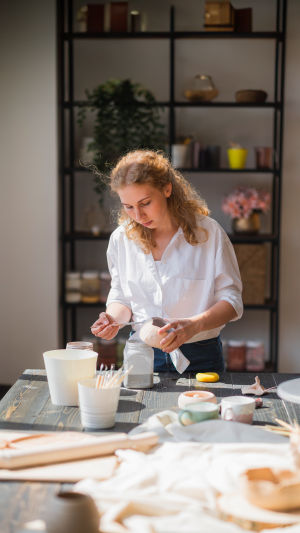
Pottery is an ancient art form that combines creativity, technique, and patience.
Creating a first pottery piece can be both exciting and challenging, as it requires understanding the properties of clay, mastering basic hand-building or wheel techniques, and developing an eye for design.
<h3>Selecting the Right Clay and Tools</h3>
Choosing the appropriate clay is a crucial first step. Different clays possess varying levels of plasticity, texture, and firing temperature. For beginners, earthenware clay is recommended due to its softness and ease of manipulation. Stoneware clay, though more durable after firing, demands more refined handling techniques.
Proper tools enhance the creative process and reduce frustration. Essential items include a wire clay cutter, rib tools for smoothing, a sponge for moisture control, and a small needle tool for fine details. Investing in quality tools ensures better results and facilitates learning proper techniques.
<h3>Understanding Clay Preparation</h3>
Clay preparation, often overlooked, determines the success of a pottery piece. Kneading or wedging the clay removes air bubbles and creates an even texture, preventing cracks during drying and firing. Uniform moisture throughout the clay improves elasticity, making shaping smoother and more predictable.
Beginners should practice consistent wedging techniques, observing how the clay responds under pressure. Proper preparation reduces the likelihood of structural weaknesses and enhances the overall finish of the piece.
<h3>Choosing a Construction Method</h3>
The method of construction shapes the entire creative experience. Hand-building techniques, such as coil, slab, and pinch methods, allow complete control over form and encourage experimentation. Coil building involves stacking and smoothing rolled clay strands, ideal for creating asymmetrical or sculptural pieces.
Slab construction utilizes flattened clay sheets, suitable for geometric designs or functional items like boxes and plates. Pinch pots are the simplest hand-building method, perfect for small bowls or cups. Alternatively, the pottery wheel offers rotational symmetry and smooth surfaces, but requires focus on centering the clay and consistent hand pressure. Choosing a method aligns with the intended design and desired level of challenge.
<h3>Maintaining Proper Moisture and Consistency</h3>
Controlling moisture throughout the creative process is essential. Clay that is too wet becomes difficult to shape, collapsing under its own weight, while overly dry clay cracks during manipulation. Frequent use of a damp sponge helps maintain surface moisture without over-saturating the piece.
Additionally, covering unfinished work with plastic sheets or damp cloths slows down drying, allowing more time for refinement. Consistency in moisture ensures stability during shaping and reduces the risk of warping in the drying or firing stages.
<h3>Focusing on Structural Integrity</h3>
Even aesthetically pleasing pieces can fail if structural integrity is neglected. Walls should maintain even thickness, and joins between clay sections must be properly scored and slipped. Thin areas are prone to cracking, while uneven thickness can result in uneven firing. Attention to detail during shaping ensures that handles, spouts, or other attachments adhere firmly.
<h3>Adding Texture and Design Elements</h3>
Surface design elevates a simple pottery piece into an expressive artwork. Techniques such as carving, stamping, or impressing patterns create visual interest. Subtle textures, like gentle ridges or stippling, enhance tactile appeal. Color can be introduced through underglazes or slips before the final firing, allowing for precise decoration.
<h3>Drying, Firing, and Finishing</h3>
The drying and firing process is as critical as shaping. Pieces must dry slowly and evenly to prevent cracking, especially in thicker sections. Firing schedules depend on clay type and kiln specifications, requiring careful attention to temperature ramps and hold times. Glazing introduces both color and protection, but the application should be uniform to avoid defects.
Creating a first pottery piece requires a combination of knowledge, patience, and attention to detail. By focusing on technique and careful planning, even a beginner can produce a piece that is both functional and visually compelling. Each creation becomes a testament to the skill and creativity invested in the art of pottery.


