

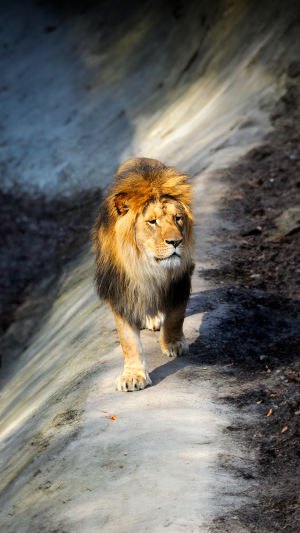
Watching a lion resting under the shade of an acacia tree or quietly moving through tall grass, it's easy to imagine why people call it the “king of beasts.”
However, lions are full of surprises, from their social structure to hunting techniques.
Observing them reveals a mix of strength, strategy, and unexpected quirks that make these animals fascinating beyond their fierce reputation.
<h3>Social Life in Prides</h3>
Unlike most big cats, lions are highly social animals, living in groups called prides.
1. <b>Cooperative Living</b> – A pride usually consists of related females, their young, and a small number of males. Females often hunt together and take care of each other's cubs. Observing a pride on the move, you'll notice coordinated efforts: some lions drive prey toward others waiting in ambush.
2. <b>Shared Responsibilities</b> – Males defend the pride's territory while females handle most hunting. This division of labor increases survival chances for everyone in the group. For example, when a new male takes over a pride, he must first assert dominance to secure the group's protection.
<h3>Hunting Techniques</h3>
Lions rely on strategy and teamwork rather than just brute force to catch prey.
1. <b>Stalking and Ambush</b> – Lions often hunt in the cooler hours of morning or evening. They use tall grass for cover and approach prey slowly, minimizing noise and visibility. Watching a pride of hunting zebras, you might notice one lion circling while another blocks escape routes.
2. <b>Cooperative Strategy</b> – Hunting in groups increases success rates, especially for larger prey. Lions coordinate positions and roles, taking turns to chase, block, and ambush. This teamwork demonstrates intelligence and planning beyond instinct alone.
<h3>Communication and Roaring</h3>
Lions are vocal animals, using sounds to communicate over long distances.
1. <b>Roaring for Territory</b> – A lion's roar can be heard up to 8 kilometers away. Roaring warns other lions to stay away and signals presence to potential mates. Observing a male lion at dusk, its deep, resonant call echoes across the savannah, asserting dominance without immediate confrontation.
2. <b>Social Signals</b> – Lions also communicate through grunts, growls, and body language. Cubs often squeak or mewl to attract attention, while mature may nuzzle or lick each other to reinforce social bonds within the pride.
<h3>Cub Rearing and Learning</h3>
Lion cubs are playful learners, practicing skills they will need as full-grown.
1. <b>Play as Practice</b> – Cubs wrestle, chase, and stalk siblings, developing coordination, strength, and hunting instincts. Observers often see cubs pouncing on tails or sneaking on siblings to mimic stalking behaviors.
2. <b>Protection</b> – Females collectively watch over cubs, keeping them safe from predators and rival males. When a new male enters the pride, mothers may hide cubs in dense vegetation until the threat passes.
<h3>Unique Adaptations</h3>
Lions have several physical and behavioral traits that make them efficient predators.
1. <b>Powerful Bodies</b> – Their muscular build allows bursts of speed up to 50 km/h over short distances, essential for ambushing prey. Even though lions tire quickly, these sprints are often enough to capture unsuspecting animals.
2. <b>Night Vision</b> – Lions hunt mostly at dawn or dusk because their eyesight adapts well to low light. This advantage allows them to approach prey stealthily, giving them an edge over species active in full daylight.
<h3>Surprising Facts</h3>
1. <b>Lazy Hunters</b> – Lions spend up to 20 hours a day resting, conserving energy for hunting.
2. <b>Strong Family Ties</b> – Lions maintain social bonds, grooming and playing together even when not hunting.
3. <b>Territorial Awareness</b> – Pride territories can cover dozens of square kilometers, and lions use scent marking and roaring to maintain control.
Lions are more than symbols of strength—they are strategic, social, and surprisingly nuanced creatures. Observing a pride in action reveals intelligence, patience, and cooperation, reminding us that even the “king of beasts” thrives through teamwork and careful planning, not just brute power.


