

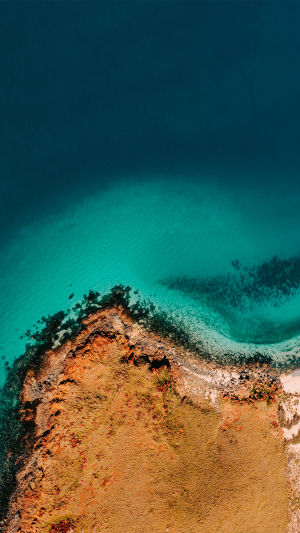
The moment stays with you longer than the view itself. Wind pushes up from below, salt sticks lightly to your lips, and your feet feel closer to open space than solid ground. There's no gradual shoreline here. Just rock, air, and an ocean that disappears straight down. Standing at places like this, you don't look out at the sea—you look into it.
Deep-sea viewpoints along dramatic coastlines offer a rare kind of travel experience. They're not about swimming or boats. They're about distance, scale, and the quiet shock of realizing how thin the line is between land and abyss. The key isn't how many places you visit, but how you move through each one.
<h3>The real way to experience deep-sea viewpoints</h3>
These locations don't reward rushing. Most are shaped by cliffs, limited-access paths, and weather that changes quickly. The common mistake is treating them like normal scenic stops: arrive, snap a photo, and leave. That approach misses the point.
The better rhythm is slower and more deliberate. Limited access means walking is often required. Wind exposure forces pauses. And once you stop moving, the scale reveals itself. Most visitors don’t stay long, which naturally thins crowds and changes the atmosphere.
<h3>Neist Point, Isle of Skye, Scotland</h3>
Neist Point sits at the western edge of the Isle of Skye, where cliffs drop sharply into the North Atlantic. The lighthouse at the end of the headland looks small against the surrounding rock, which gives you an immediate sense of depth and exposure.
<b>Access:</b> short but steep coastal walk
<b>Best time:</b> early morning or near sunset
<b>Parking:</b> small lot, fills quickly
<b>Cost:</b> free
Arriving before 9:00 a.m. makes a noticeable difference. Later in the day, people tend to cluster near the first viewpoints and leave quickly due to wind. If you continue past the main platform and sit for ten minutes, the area empties out fast.
<h3>Cabo Girão, Madeira, Portugal</h3>
Cabo Girão is one of Europe's highest sea cliffs, with a vertical drop that feels exaggerated because the ocean below is so close to the rock face. A glass-floored platform extends over the edge, turning depth into something physical.
<b>Platform access fee:</b> about $2 USD
<b>Opening hours:</b> typically 9:00 a.m. to 7:00 p.m.
<b>Height:</b> roughly 580 meters above sea level
<b>Access:</b> car or bus
The platform itself is brief, but the surrounding paths matter more. Walk away from the glass deck and follow the cliff trail for a few minutes. The sense of height remains, but the noise disappears. Late afternoon light reduces glare on the water and makes the depth easier to read.
<h3>Kalaupapa Lookout, Molokai, Hawaii</h3>
This viewpoint looks down onto one of the most dramatic coastlines in the Pacific. The sea floor drops quickly here, creating darker water tones close to shore that visually signal depth.
<b>Access:</b> short walk from parking area
<b>Best conditions:</b> clear mornings
<b>Cost:</b> free
<b>Wind exposure:</b> high
Cloud cover often moves in by midday, flattening the view. Arriving before 10:00 a.m. usually means clearer air and stronger contrast between cliff and water. Standing still for a few minutes helps your eyes adjust to the scale below.
<h3>Timing and conditions matter more than location</h3>
Across all deep-sea viewpoints, timing affects experience more than geography. Wind increases as the day warms. Light angles flatten the ocean surface at noon. Crowds arrive in predictable waves.
A simple pattern works consistently:
• Early morning brings clearer air and fewer people.
• Late afternoon offers better contrast and color.
• Midday is usually the least rewarding.
Weather forecasts should be checked the same morning, not the night before. Conditions change fast near exposed cliffs.
<h3>Where to stay nearby</h3>
Staying close to these viewpoints isn't about luxury. It's about access and flexibility.
Choose locations that let you arrive early without driving long distances. Smaller towns or rural accommodations usually offer quieter evenings, which makes early starts easier. Larger hubs provide dining options but often add commute time and noise.
The trade-off is simple: closer stays give you better timing, while busier towns give you more services. Decide which matters more for your schedule.
<h3>Local habits that change the experience</h3>
1. Stop moving once you arrive. Depth takes time to register, and constant walking flattens perception.
2. Watch the water, not the horizon. Changes in color and movement near the cliff edge reveal how quickly the sea drops away.
3. Leave space between you and others. Even a few steps can restore silence and focus.
Ignoring these habits usually turns the visit into a quick photo stop instead of a lasting memory.
As you step back from the edge and the ground feels solid again, the contrast lingers. Deep-sea viewpoints don't overwhelm you with activity. They offer stillness, scale, and a moment to recalibrate. Next time you reach the end of the land, will you pause long enough to really look down?


