

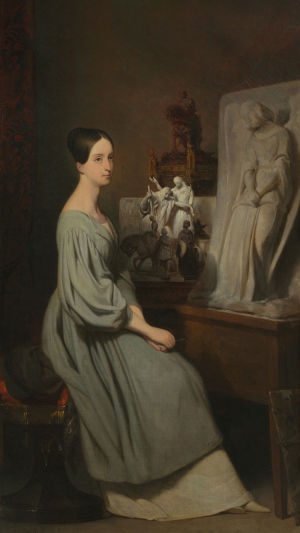
“Mary of Orleans in Her Studio” captures more than a historical figure—it conveys the intersection of identity, artistry, and era.
From the careful brushstrokes to the composition of the studio space, this painting invites viewers to step into Mary's world and understand her as both a person and a symbol of female agency in a male-dominated art world.
<h3>The Artist and Their Technique</h3>
The painting is a historical piece executed with meticulous attention to detail.
<b>1. Composition</b>
The artist positions Mary centrally, surrounded by tools and canvases, emphasizing her active role in creation rather than passive observation.
<b>2. Color and Light</b>
Soft natural light illuminates the studio, creating a sense of intimacy. Warm tones on her face and attire contrast subtly with the cooler background, highlighting her presence.
<b>3. Brushwork</b>
Careful layering and controlled strokes enhance textures in fabrics, furniture, and art materials, reflecting both realism and reverence for the subject.
<h3>Historical and Cultural Context</h3>
Mary of Orleans was an emblem of learning, creativity, and social mobility in her era. The painting situates her within a professional environment, reinforcing her identity as a skilled practitioner rather than merely a noblewoman or muse.
<b>1. Women in Studios</b>
At a time when women were often excluded from professional spaces, this work visually asserts her legitimacy as an artist.
<b>2. Symbolism in Objects</b>
Paintbrushes, sketchbooks, and easels are carefully included to underline her dedication to craft. Each object is symbolic of education, skill, and agency.
<b>3. Historical Accuracy</b>
The attire, studio setting, and even minor details reflect research into period-accurate representation, lending credibility and depth to the painting.
<h3>Emotional Resonance</h3>
Beyond historical accuracy, the work conveys an emotional narrative. Mary's expression—poised yet contemplative—draws viewers into her inner world. The studio itself feels lived-in, intimate, and inspiring, creating a personal connection between the viewer and subject.
<h3>Historical Background and Artistic Context</h3>
While Mary of Orleans in Her Studio focuses on the subject’s presence within her artistic environment, it helps to anchor her identity in real art‑historical context. The figure of Princess Marie d’Orléans (1813–1839), who is often portrayed in studio settings in 19th‑century works, was not only a member of the French royal family but also an accomplished artist in her own right.
She studied under prominent painters such as Ary Scheffer and pursued sculpture and drawing, creating works that included sculptures of Jeanne d’Arc (Joan of Arc) and other patriotic subjects commissioned by institutions like Versailles. Her artistic ambition and skill were notable in an era when women rarely received equal recognition in the arts.
<h3>Reflections on the Painting</h3>
“Mary of Orleans in Her Studio” reminds us that history is not just events and dates—it is lived experience captured through art. The artist's choices in composition, light, and symbolism convey respect for Mary's intellect and skill while inviting modern viewers to reflect on the ongoing conversation about women in creative spaces. Ultimately, this painting is both a historical document and a celebration of human creativity, bridging past and present through the lens of a single, inspiring figure.


