

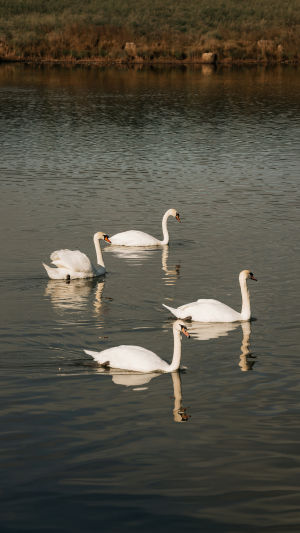
Among waterbirds, few species command as much attention for their bold and sometimes aggressive behavior as the Swan.
While ducks and geese are often seen sharing lakes and wetlands in relatively loose groups, swans are frequently observed defending large stretches of water with surprising intensity.
Their territorial nature is not random behavior—it is the result of evolutionary pressures, reproductive strategy, and ecological demands that have shaped them into one of the most protective waterfowl groups in the world. Understanding why swans behave this way requires looking beyond surface impressions and into biology, breeding systems, and habitat competition.
<h3>Strong Pair Bonds and Long-Term Monogamy</h3>
One of the key reasons swans are highly territorial lies in their long-term monogamous pairing system. Many swan species form pair bonds that can last for years, and sometimes for life. Unlike ducks, where mating systems are often seasonal and flexible, swan pairs invest heavily in maintaining stable partnerships. This stability increases their motivation to defend shared resources.
Once a suitable nesting territory is established, both partners contribute to its defense, creating a coordinated and persistent guarding behavior that is more organized than what is typically seen in other waterfowl. Because their reproductive success depends on the survival of the pair and their offspring over multiple seasons, swans naturally evolve stronger territorial instincts.
<h3>High Parental Investment and Cygnets Protection</h3>
Swans are known for producing relatively small broods compared to many duck species, but they compensate with extremely high parental care. Cygnets (young swans) remain dependent on their parents for months, sometimes up to a year in certain species. This extended care period means that swan families must secure a stable and safe environment for a long time.
Any intrusion—whether from predators, rival swans, or even humans—can threaten the survival of their offspring. As a result, territorial aggression becomes a necessary defense strategy rather than an optional behavior. Both parents actively participate in guarding cygnets. They will hiss, spread their wings, and even physically charge at perceived threats. This level of coordinated defense is less common in many duck species, where offspring often become independent much earlier.
<h3>Competition for Prime Nesting Areas</h3>
Swans require specific environmental conditions for nesting, typically shallow wetlands with abundant vegetation and minimal disturbance. These suitable habitats are often limited, especially in regions with heavy human development or dense populations of waterfowl.
Because high-quality nesting sites are scarce, swans are forced into direct competition for space. Once a pair secures a favorable territory, they defend it aggressively to prevent displacement.
In contrast, many duck species are more flexible in nesting choices, often utilizing a wider range of wetlands or even temporary water bodies. This flexibility reduces the intensity of territorial conflict among ducks compared to swans, which depend heavily on stable, resource-rich zones.
<h3>Size, Strength, and Defensive Capability</h3>
Swans are among the largest flying waterbirds, with species such as the mute swan and trumpeter swan reaching impressive body sizes. Their physical strength plays a direct role in their territorial behavior. A larger body allows swans to exert dominance over smaller waterfowl through intimidation and direct confrontation. Their wings are powerful enough to deliver strong defensive strikes, and their long necks provide both reach and visual display during threat responses.
<h3>Hormonal and Seasonal Triggers</h3>
Territorial aggression in swans is also influenced by hormonal changes, particularly during the breeding season. Elevated levels of reproductive hormones increase protective instincts and reduce tolerance toward perceived threats. During this period, swans become significantly more reactive. Even minor disturbances near nesting areas can trigger defensive displays. This seasonal shift is common among waterfowl, but in swans, the intensity and duration of territorial response are notably higher.
<h3>Comparison with Other Waterfowl</h3>
When compared to ducks and geese, swans stand out due to the duration and intensity of their territorial behavior. Ducks often rely on concealment and rapid reproduction strategies, while many geese defend territories but in more flexible and migratory patterns.
Swans, however, invest in long-term territory establishment and defense. Their behavior is less about temporary occupation and more about sustained control of a specific habitat. This difference highlights how ecological strategy shapes behavioral evolution across waterfowl species.
<h3>Ecological Impact and Human Interaction</h3>
In some regions, particularly where non-native populations have been introduced, swans can become dominant and even disruptive to local ecosystems. Their territorial behavior may displace other waterfowl and alter vegetation patterns in shallow wetlands. This impact is not inherently negative in evolutionary terms, but it demonstrates how powerful their territorial instincts can be when environmental balance shifts.
Swans are more territorial than many other waterfowl because of a combination of biological and ecological factors: long-term monogamous bonding, extended parental care, limited nesting habitats, strong physical capability, and heightened seasonal hormones. These elements work together to create a species that prioritizes defense of space and offspring survival above social tolerance.
Rather than simple aggression, their territorial nature is a carefully evolved survival strategy shaped by millions of years of adaptation to demanding wetland environments. Observing swans in their natural habitat reveals not just a protective bird, but a highly committed guardian of family and territory—and the closer one looks, the more fascinating their behavior becomes, leaving us to wonder how such elegance can coexist with such fierce determination in a single creature.


